
Sleep is a Superpower explores how a good night’s rest repairs the body, restores the mind,
and steadily rebuilds overall health. Even lifelong poor sleepers can retrain their
systems and unlock the life-changing power of deep, consistent sleep.
My Story: I was in my mid-60’s when I learned at an overnight sleep lab that I had sleep apnea and a neurological condition know as restless leg syndrome. Between the apnea and RLS episodes, my sleep could be disturbed 35+ times an hour without me ever knowing it. I know that sounds insane, but the breathing and RLS episodes didn’t wake me completely, they woke me just enough to pull me out of my restorative sleep cycles. Oddly, I was still functional, but looking back, and comparing then to how I feel now, I’d say I was functioning at about 50 to 70 percent of what I was actually capable of. Obviously not every day, but a good percentage of them for sure.
And this went on for decades…
It was serious, and even dangerous mostly due to the years it went on. It contributed to the calcification of my arteries, which led to heart disease, severe aortic stenosis, and then there’s the low oxygen levels that happened during my apnea episodes that did nothing for the health of my brain and often caused brain fog, memory, and concentration issues. One day I would feel pretty good, and then the next day I’d have a hard time remembering my zip code.
It’s been about 7 years since I learned of my sleep issues. The CPAP helps, but the RLS can be a real bitch some nights. I recently, (3.31.26), had the aortic valve in my heart replaced and I have to say that this was the biggest game changer to my physical and mental health, to the point that I told my cardiologist that I don’t know how to describe it, but I don’t feel like the same person anymore. I was told that for decades, between my chronic sleep deprivation, heart issues, etc., I was running on reserves. My body never fully recovered from workouts, stress, or even simple day to day activities.
I can’t believe how much better I feel today. I try not to think about what could have been had I known of this years ago, but instead I try to focus and look forward to what will be. When I say sleep is a superpower, I mean it…
Could living the life of your dreams be as simple as getting a good night’s sleep? Maybe…
Sleep isn’t just rest, it’s one of the most powerful biological tools we have, and most of us barely understand how transformative it can be. A good night’s sleep is far more than simply “feeling refreshed.” It’s a full-body reset, a deep repair cycle, and a neurological tune-up that affects everything from your metabolism and hormones to your memory, mood, and long-term health. When we sleep well, our bodies work the way they were designed to work. When we don’t, everything starts to fray at the edges.
Physically, sleep triggers an overnight maintenance crew of sorts. Muscle fibers damaged during the day’s activities are repaired, inflammation settles, and hormones like growth hormone surge to restore tissues. Your immune system resets as well, producing and mobilizing the cells that protect you from illness. Even your heart and blood vessels get a break: blood pressure dips, your cardiovascular system reduces its workload, and your body has a chance to rebalance itself. A well rested body is stronger, more resilient, and far better equipped to handle the demands of daily life.
Mentally, sleep performs an even more astonishing series of miracles. While you sleep, your brain clears out toxins and metabolic waste that build up during the day, almost like a nightly power wash. Memories are sorted, emotions are processed, and new neural connections are formed. Creativity improves, problem-solving sharpens, and emotional stability increases. Sleep is where you rebuild your ability to think clearly, react wisely, and maintain balance. It’s not an exaggeration to say that a good night’s sleep literally helps build a better version of your mind.
Over time, consistent quality sleep transforms your entire system. Chronic stress softens, hormones stabilize, and your energy becomes predictable instead of erratic. Your mood becomes steadier, your metabolism becomes more efficient, and your cognitive function strengthens. This isn’t magic, it’s biology. The body and brain are designed to restore themselves nightly, and when you allow that process to happen often enough, you begin to feel like you’ve stepped into a stronger, calmer, sharper version of yourself.
But what about people who consider themselves “poor sleepers”? Here’s the truth: almost anyone can learn to sleep better. Sleep is a skill, not a fixed trait. Just as a beginner weightlifter doesn’t start with heavy plates, a struggling sleeper doesn’t leap into perfect eight-hour nights. Improvement happens gradually, one habit at a time, one small win at a time. You nudge your schedule into place, reduce the chaos around bedtime, strengthen your circadian rhythm, and slowly retrain your body to trust the process of sleep again.
The body responds to consistency. The mind responds to cues. And both can be reshaped through repetition. When you build healthy sleep practices—gentle wind-down routines, predictable sleep and wake times, light management, and small daily decisions that support recovery—you essentially “condition” yourself the way an athlete trains for strength. Before long, your sleep system becomes more reliable, your nights become deeper, and your mornings become easier. Progress may be slow at first, but it compounds in powerful ways.
Sleep truly is a superpower, one that every person already carries within them. It’s not reserved for the lucky few who fall asleep instantly or never wake up at night. It’s available to anyone willing to build it, nurture it, and reclaim it. When you learn to sleep well, you’re not just getting rest—you’re rewriting your health story from the inside out. Every great day begins the night before.
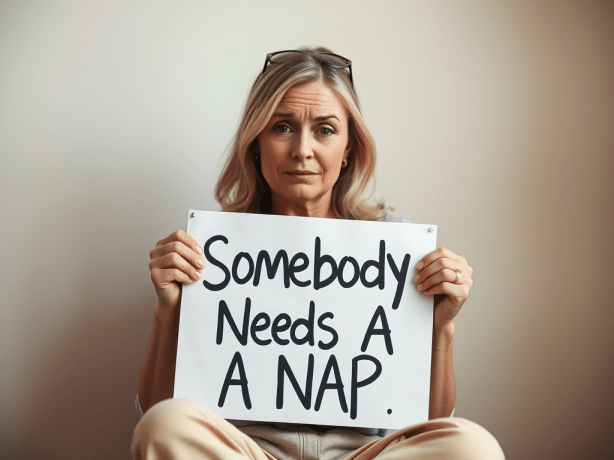
SOMEBODY NEEDS A NAP .COM
Could living the life of your dreams be as simple as getting a good night’s sleep? Maybe…

