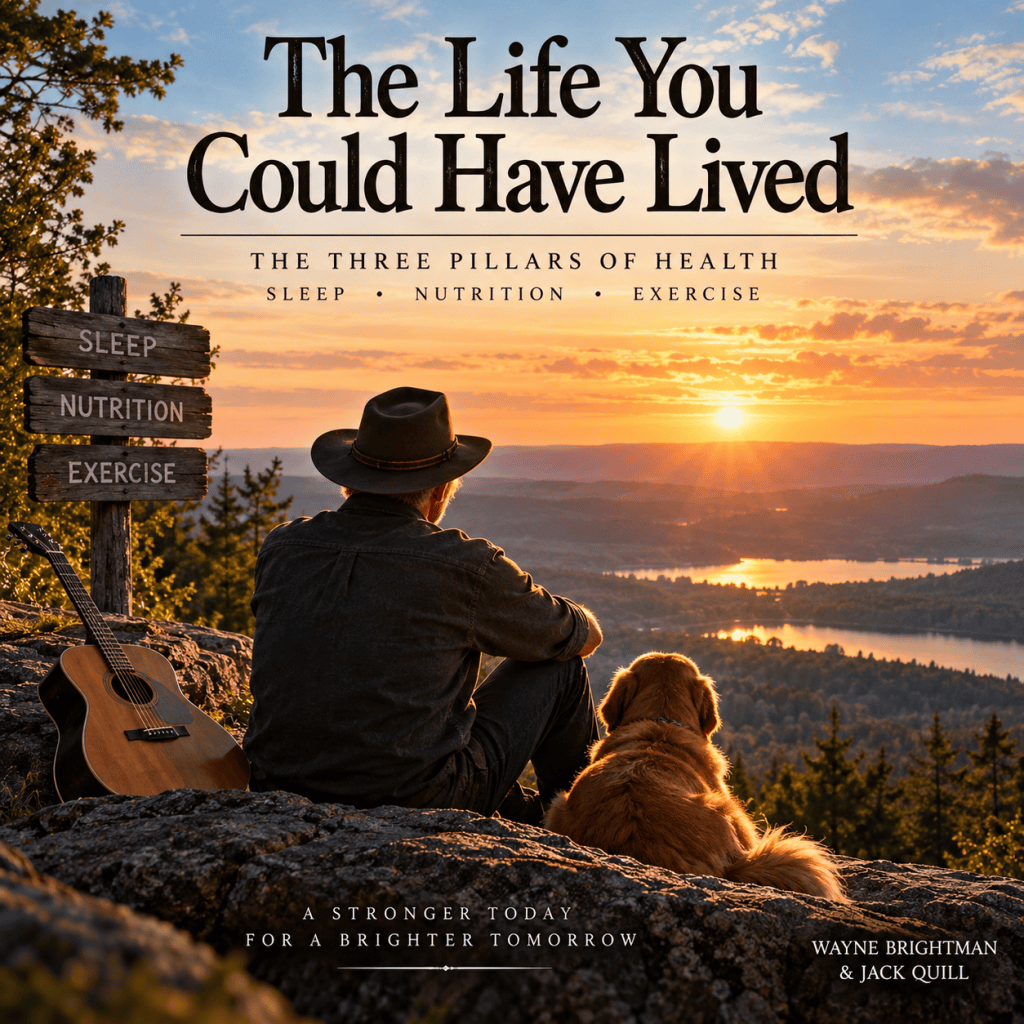
Good health rests on three fundamental pillars: sleep, nutrition, and exercise. Each supports the
others, and neglecting any one of them can gradually undermine the entire structure.
THE LIFE YOU COULD HAVE LIVED:
“Refusing to be who you could be is its own sin.” ~Source unknown
It’s a powerful statement. One that challenges us to stop making excuses, stop wasting time, and become the person we’re capable of becoming. But what happens when you’re willing to do the work, eager to move forward, and determined to make something of yourself, yet your mind and body simply won’t cooperate? What happens when the ambition is there, the desire is there, but the energy, clarity, and motivation seem to disappear before the day even begins? Sometimes what looks like a lack of ambition is actually a lack of health. And sometimes the greatest obstacle standing between you and the life you could have lived is something you’ve been overlooking for years.
Good health rests on three fundamental pillars: sleep, nutrition, and exercise. Each supports the others, and neglecting any one of them can gradually undermine the entire structure. Exercise strengthens the cardiovascular system, muscles, and bones while improving mood and metabolic health. Proper nutrition supplies the energy and raw materials necessary for the body and brain to function. Sleep provides the opportunity for recovery, memory consolidation, emotional regulation, and countless biological processes that keep everything running. You can eat a near-perfect diet and exercise faithfully, but if you’re chronically sleep-deprived, your health and performance may still suffer. Likewise, adequate sleep cannot completely compensate for poor nutrition or years of physical inactivity. These aren’t three independent choices. They’re three interconnected parts of the same foundation.
Sleep may be the most underestimated of the three. Unlike poor nutrition or physical inactivity, chronic sleep deprivation can become so familiar that we stop recognizing it as a problem. We learn to function while exhausted. We push through the brain fog, the irritability, the forgotten thoughts, and the inability to concentrate. We convince ourselves that everyone feels this way. Over time, fatigue can quietly change our personalities, influence our decisions, damage relationships, and rob us of opportunities. Dreams get postponed. Projects remain unfinished. Confidence erodes as we repeatedly fail to accomplish what we know we’re capable of doing. Eventually, we may begin to believe that the problem is our character rather than our exhaustion. That’s a terrible price to pay for something we may not even realize is happening.
Nutrition and exercise are equally important, and their effects reach far beyond appearance or physical fitness. A poor diet can leave us struggling with energy fluctuations, inadequate nutrients, and increased risks of metabolic and cardiovascular disease. Physical inactivity gradually reduces strength, endurance, mobility, and resilience. Both can influence sleep quality, just as inadequate sleep can increase cravings, reduce motivation to exercise, and interfere with recovery. It’s a vicious cycle: poor sleep makes healthy choices more difficult, unhealthy choices can worsen sleep, and the resulting fatigue makes physical activity feel like an impossible task. One weakened pillar places additional strain on the other two. Left unchecked, the consequences can extend into nearly every corner of our lives.
Perhaps the most important lesson is that we should never confuse struggling with refusing. There is a difference between someone who won’t make the effort and someone whose health makes that effort extraordinarily difficult. Personal responsibility still matters. We should make the best choices we can, seek answers when something isn’t right, and take ownership of the things within our control. But responsibility also means recognizing that determination alone cannot cure a sleep disorder, replace missing nutrients, or reverse every physical limitation. The goal isn’t perfection. It’s building the strongest foundation our circumstances allow, one decision and one day at a time. Because the greatest tragedy isn’t simply growing older. It’s looking back and wondering who we might have become if we’d understood sooner how much our health was shaping our lives.
The life you could have lived may still be the life waiting for you. And perhaps the first step toward becoming that person isn’t working harder, pushing longer, or demanding more of yourself. Perhaps it’s finally giving your mind and body what they need to help you get there.
Wayne Brightman & Jack Quill
©2026 Just Loud Enough .Com
Not Too Loud, Not Too Soft, Just Loud Enough

